

- Like
- Digg
- Del
- Tumblr
- VKontakte
- Flattr
- Buffer
- Love This
- Odnoklassniki
- Meneame
- Blogger
- Amazon
- Yahoo Mail
- Gmail
- AOL
- Newsvine
- HackerNews
- Evernote
- MySpace
- Mail.ru
- Viadeo
- Line
- Comments
- Yummly
- SMS
- Viber
- Telegram
- Subscribe
- Skype
- Facebook Messenger
- Kakao
- LiveJournal
- Yammer
- Edgar
- Fintel
- Mix
- Instapaper
- Copy Link
Water Apple is an uncommon fruit, which makes it perfect to grow in the garden or pots! Let’s have a look at how to care for Java Apples.
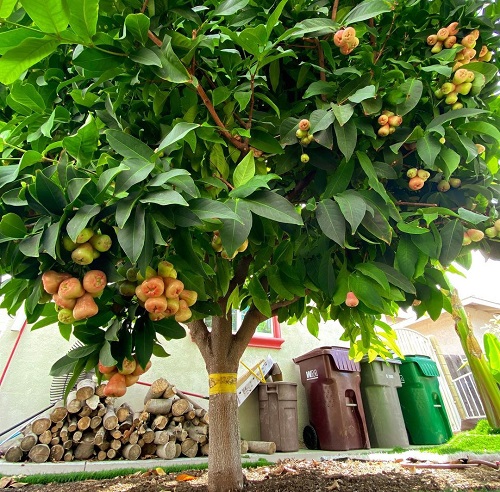
Water Apples are quite a rare and unique fruit in India, and in this article, we’ll be delving into the details of what it takes to successfully grow Java Apples and offer tips and tricks along the way.
Check out How to Grow Singhara Plant here
Live Plants for Your Garden
About Water Apple
Water Apple, also called as Java Apple is a tropical fruit that is native to Southeast Asia and parts of India. It is a small, round fruit that is usually about the size of a tennis ball and has thin, leathery skin. The flesh of the fruit is crisp, and juicy, and has a sweet and slightly sour flavor.
Water Apple is a versatile fruit that can be consumed in many ways. It can be eaten fresh, added to salads, or even used in cooking. The fruit is also rich in nutrients such as vitamin C, fiber, and antioxidants, making it a healthy addition to any diet. Overall, Water Apple is a delicious and nutritious fruit that is worth a try if you have the chance to taste it.
Botanical Name: Syzygium samarangense
Common Names: Watery rose apple, Bell fruit, and Jambu
Learn How to Grow Kabit Fruit | Growing Wood Apple here
Soil & Plant Food
How to Propagate Water Apple?
Pots & Planters for Your Space

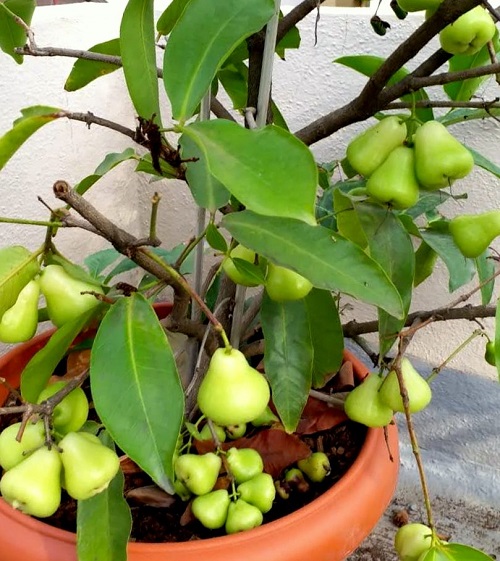
Water Apple can be propagated through various methods, including seeds, cuttings, and air layering. Here’s a step-by-step guide on propagating water apple using these different techniques:
Propagation by Seeds:
- Obtain fresh Water Apple seeds from a ripe fruit. Make sure to select seeds from a healthy and high-quality fruit.
- Clean the seeds by removing any fruit pulp or debris from their surface.
- Fill a small pot or seed tray with a well-draining potting mix. Moisten the soil slightly.
- Plant Water Apple seeds about 1 inch deep into the soil, spacing them apart.
- Place the pot or tray in a warm, well-lit area but away from direct sunlight.
- Keep the soil consistently moist, but avoid overwatering to prevent rotting.
- Germination can take several weeks. Once the seedlings have developed a few sets of true leaves, they can be transplanted into individual containers or directly into the ground.
Propagation by Cuttings:
- Select a healthy, disease-free branch from an established Water Apple tree. The cutting should be about 6-8 inches long and have several nodes.
- Make a clean, angled cut just below a node, and remove any leaves from the lower half of the cutting.
- Optional: Apply a rooting hormone to the cut end of the cutting to encourage root development.
- Fill a small pot with a well-draining potting mix or a mixture of peat and perlite.
- Create a hole in the potting mix using a pencil or a similar tool and insert the cutting into the hole.
- Firmly press the soil around the cutting to ensure good contact.
- Place the pot in a warm, humid environment with bright, indirect light.
- Mist the Water Apple cutting regularly to maintain high humidity levels around the leaves.
- After a few weeks, roots should begin to form. You can gently tug on the cutting to check for resistance, indicating the presence of roots.
Explore 10 Apple Growing Secrets from Professionals you Shouldn’t Miss! here
Requirements to Grow Water Apples
Sunlight
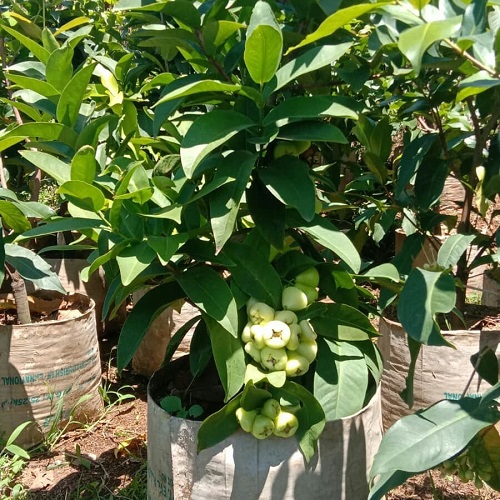
Water Apple trees require full sun exposure to thrive and produce abundant fruit. Ensure that they receive at least 6 to 8 hours of direct sunlight each day.
Choose a location in your garden or orchard that is not shaded by tall buildings or trees.
Soil
This trees prefer well-draining soil that is rich in organic matter. The ideal soil pH for growing Water Apple is slightly acidic to neutral, ranging from 5.5 to 7.0. If your soil is heavy clay or compacted, consider improving its drainage and structure by adding organic amendments such as compost or well-rotted manure.
Water
Water Apple trees require regular and consistent watering, especially during the dry season. Provide deep watering to ensure that the root system receives sufficient moisture.
Avoid waterlogging or allowing the soil to become overly saturated, as it can lead to root rot. However, make sure the soil remains consistently moist, especially during fruit development.
Check out How to Water Air Plants here
Temperature and Humidity
This trees thrive in warm tropical climates. Water Apples prefer temperatures between 20°C (68°F) and 35°C (95°F). They are not tolerant of frost or temperatures below 10°C (50°F).
In India, Java apples can be successfully grown in the southern and coastal regions that have a tropical or subtropical climate.
Water apple trees prefer high humidity levels. In regions with lower humidity, you can create a microclimate by mulching around the base of the tree and providing regular misting or spraying of water to increase humidity levels.
Water Apple Care
Fertilizer
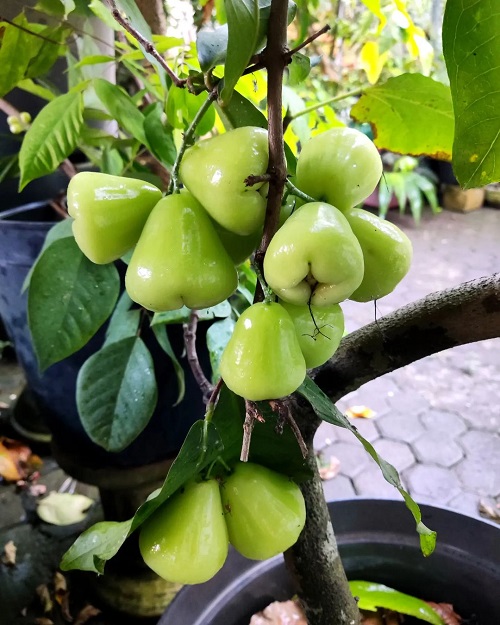
Apply a balanced fertilizer with a ratio of nitrogen (N), phosphorus (P), and potassium (K), such as a 10-10-10 or 14-14-14 formula. Begin fertilizing in the early spring, just before the start of the growing season. Follow the manufacturer’s instructions for the application rates and frequency.
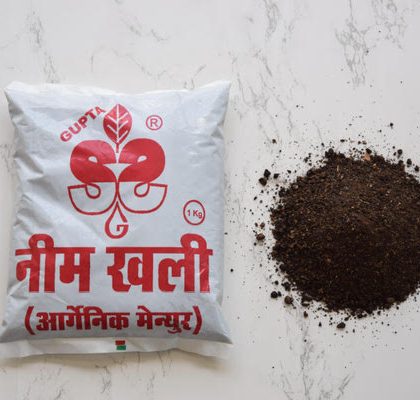
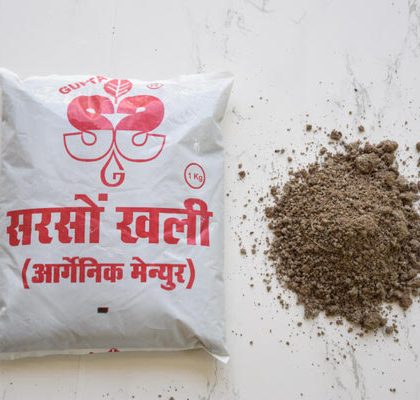
Organic fertilizers like compost, well-rotted manure, or organic plant-based fertilizers can also be beneficial for Water Apples.
Learn Why Adding Manure and Fertilizers to the Plants is Beneficial here
Pruning
Prune Water Apple trees during the dormant season, which is typically in late winter or early spring before new growth begins. Remove any dead, diseased, or damaged branches. Thin out crowded branches to improve airflow and sunlight penetration into the tree’s canopy.
Maintain a balanced shape by pruning back excessively long branches. Prune off any suckers or water sprouts that grow from the tree’s base or along the trunk. Regular pruning helps to maintain Water Apple health, control size, and promote better fruit production.
Pest and Diseases
Monitor your Java apple trees regularly for signs of pests or diseases. Early detection is key to effective control. Common pests that may affect Java apple trees include fruit flies, scale insects, mealybugs, and aphids. Use appropriate insecticides or organic pest control methods to manage these pests.
Diseases that can impact Java apple trees include fungal infections such as anthracnose, powdery mildew, and fruit rot. Provide good air circulation, avoid overhead watering, and use fungicides as necessary to control these diseases.
Proper sanitation practices, such as removing fallen leaves and fruits, can help reduce the likelihood of diseases spreading. Consult with local agricultural extension services or a horticulturist for specific pest and disease management recommendations in your region.
- Like
- Digg
- Del
- Tumblr
- VKontakte
- Flattr
- Buffer
- Love This
- Odnoklassniki
- Meneame
- Blogger
- Amazon
- Yahoo Mail
- Gmail
- AOL
- Newsvine
- HackerNews
- Evernote
- MySpace
- Mail.ru
- Viadeo
- Line
- Comments
- Yummly
- SMS
- Viber
- Telegram
- Subscribe
- Skype
- Facebook Messenger
- Kakao
- LiveJournal
- Yammer
- Edgar
- Fintel
- Mix
- Instapaper
- Copy Link